The macro argument pieces. Why tourism is infrastructure, not amenity. How destinations compete on systems, not scenery. Capital follows architecture. Investment ecosystem analysis.
What We Mean by Development Ecosystem Strategy and Why It Changes Everything
A destination is the system that determines whether assets such as heritage sites, festivals, national parks or even a resort generates sustained economic value.
This distinction is where our work at Red Clay begins.
Most conversations about tourism development in Africa start with attractions, arrival numbers, and hotel beds. These are reasonable things to measure, but they are outputs of a functioning system, not the system itself. When they become the primary focus of strategy, the result is investment that underperforms, infrastructure that sits underutilised, and tourism growth that is narrower and more fragile than it needs to be.
The pattern is consistent. A new hotel opens in an area with unmotorable roads, an underskilled hospitality workforce, and no coherent destination brand. Operations run below capacity. The supply chain imports rather than sources locally. The economic multiplier (the ripple of spending that should move through the local economy) leaks out rather than circulates. What is happening? The attraction exists, the investment arrived, but the ecosystem was not there to receive it.
Development ecosystem strategy addresses the conditions.
It works across five interconnected dimensions:
connectivity, which determines whether a destination can be reached at competitive cost;
hospitality capacity, which determines whether the accommodation and services infrastructure can support visitor demand;
workforce readiness, which determines whether the skills exist locally to deliver quality experiences;
safety and governance, which shapes the risk perception that drives investor and visitor behaviour;
and brand and reputation, which determines how a destination is understood and evaluated by the people whose decisions matter most.
In the ecosystem, no single dimension works in isolation. A destination with excellent connectivity but weak workforce readiness will attract visitors it cannot serve well. Strong hospitality stock without brand clarity is invisible to the investors and travelers most likely to value what it offers. A destination with all five dimensions functioning coherently becomes a place where investment and development decisions are easier to make, returns are more predictable, and tourism generates economic value that extends well beyond the sector itself.
This is what investment readiness actually means. This readiness goes beyond a marketing campaign or the development of a masterplan. It requires a system in which the conditions for sustained economic activity exist and are visible to capital. This is why we describe our work as development ecosystem strategy rather than tourism consultancy.
Tourism consultancy produces recommendations for the tourism sector. Development ecosystem strategy produces the conditions for a destination’s economy to work, over the long-term. Tourism is the vehicle, the sector through which connectivity, capacity, workforce, safety, and reputation are built and tested. But the question we bring to every engagement goes beyond how to improve visitor numbers. It is how do we make this place more competitive, more resilient, and more worth investing in, for residents, for businesses, and for the institutions that allocate capital across the continent?
Africa has numerous destinations worth investing in but the ecosystem infrastructure that makes these destinations valuable and accessible for investment and development is missing.
Diaspora Investment, Wellness Growth, and Africa’s Emerging Experience Economy
November reflected a tourism landscape in transition. Diaspora backed investment in leisure and hospitality facilities in Nigeria, particularly in Lagos, has increased. Global wellness markets continue to expand, and digital nomadism is reshaping urban hospitality across Africa. These trends raise strategic questions: Can seasonal booms be converted into sustainable, year-round economies? And can African destinations evolve from passive backdrops to intentional, experience-driven wellness economies?
Key Takeaways
Diaspora capital is driving growth in Nigeria’s leisure and hospitality sector, particularly in Lagos, but activity remains highly seasonal.
Reduced outbound education and medical tourism presents a window to upgrade domestic services.
Global trends such as wellness tourism and digital nomadism offer high-value opportunities if infrastructure, regulatory support, and strategic planning align.
Nigeria: Diaspora Investments and Domestic Medical/Educational Tourism Opportunity
Investment in leisure and hospitality in Lagos is expanding, encompassing entertainment facilities, restaurants, bars, lounges, self-serviced apartments, boutique hotels, and small scale resorts. Demand for hospitality facilities and services peak during the Detty December festive season, driven by returning diaspora and local travelers, creating both high revenue potential and intense seasonal pressure.
This growing investor interest is facilitated by Lagos State’s relatively investor-friendly regulatory framework, which has enabled diaspora entrepreneurs to participate in leisure infrastructure development. However, while festive-season peaks generate visibility and short-term gains, sustaining occupancy and revenue during off-peak periods remain a challenge. Outside this window, visitor volumes decline, and within this window, current leisure offerings are mostly targeted towards young adults, nightlife lovers, and the ‘I Just Got Back’ (IJMB) seasonal diaspora returnees in December. The broader question, not just for investors and business owners but also for public-sector stakeholders who create the necessary policy reforms and an enabling environment, is how to convert this episodic end-of-year enthusiasm into more robust, year-round programming and economic activity.
Even more importantly, how can we expand this end-of-year festive culture beyond Lagos and build more intentional programming and infrastructure across multiple states and cities, and position Nigeria as a year-round tourism destination, and not just Lagos as an enclave for Detty December?
For leisure and hospitality in Lagos, and by extension Nigeria, to thrive beyond seasonal surges, they may benefit from diversified programming, such as school excursions, corporate events, or wellness activations, that smooth demand across the calendar year. This will include aligning offerings with the seasons, weather patterns, traveler interests, and key cultural or heritage months, all curated through the lens of local context and community identity. Developing multi-purpose facilities capable of hosting year-round programmes that appeal to people of all ages and backgrounds, as well as improving tourist infrastructure across the country, can also help diversify revenue and justify further investment.
Lagos thrives on “Detty December” buzz, but its leisure economy remains seasonal and appealing to a limited market. Can its nightlife offerings and diaspora energy be turned into year-round appeal?
Image Credit: BBC (The Plug Entertainment)
Africa’s Growing Digital Nomad Market
Urban African destinations are increasingly attractive to global digital nomads, drawn by reliable air connectivity, internet speed, cultural richness, and affordability. Cities like Cape Town, Marrakech, Nairobi, and Egypt’s coastal cities are gaining traction as global digital nomad destinations, offering a mix of connectivity, culture, and cost. Yet most of these remote workers come from outside Africa: Europe, North America, the Middle East, and Asia. Intra-continental mobility for African professionals remains constrained by visa regimes, uneven internet reliability, and limited regional air links.
Seven of the top 10 cities for digital nomads in Africa are in North Africa, with Egypt alone accounting for four. In sub-Saharan Africa, only Senegal represents West Africa, and Kenya represents East Africa. This signals a significant gap and opportunity for other African countries.
Digital nomads need more than reliable internet, seamless travel, and coworking spaces to be drawn to destinations; they are attracted to the authentic culture, lifestyles, and hospitality of the host community. If a destination offers little beyond what they would usually find back home, this would not be a compelling reason for them to travel. To attract this growing market, sub Saharan African cities will need to be more intentional: rather than design foreign hospitality offerings to capture digital nomads, the focus should be on authenticity, affordability, and meaningful immersive experiences.
Of course, it goes without saying that dependable digital infrastructure, tourist service facilities, and improved transport connectivity are non-negotiables.
Beyond this group, there are also African tech workers and entrepreneurs who are able to live and experience different parts of the continent whilst working remotely. Investors can consider creating integrated live-work-play environments in cities, combining coworking spaces, extended-stay accommodations, and affordable and attractive tourism and lifestyle experiences for digital nomads from Africa, not just from outside of Africa. The governments will have a role to play: coordinated and streamlined visa policies, improved internet reliability and digital connectivity, and visitor safety to enable intra-African professional mobility, ensuring that African talent benefits alongside global remote workers.
Digital nomads and remote workers are driving demand for lifestyle-rich destinations across Africa, fueling growth in co working hubs, long-stay housing, and culture-embedded neighbourhoods.
Image Credit: A seaside outdoor restaurant in Cape Town, South Africa (Girl on a Zebra)
Global: The $6.8 Trillion Wellness Economy and Generational Travel Trends
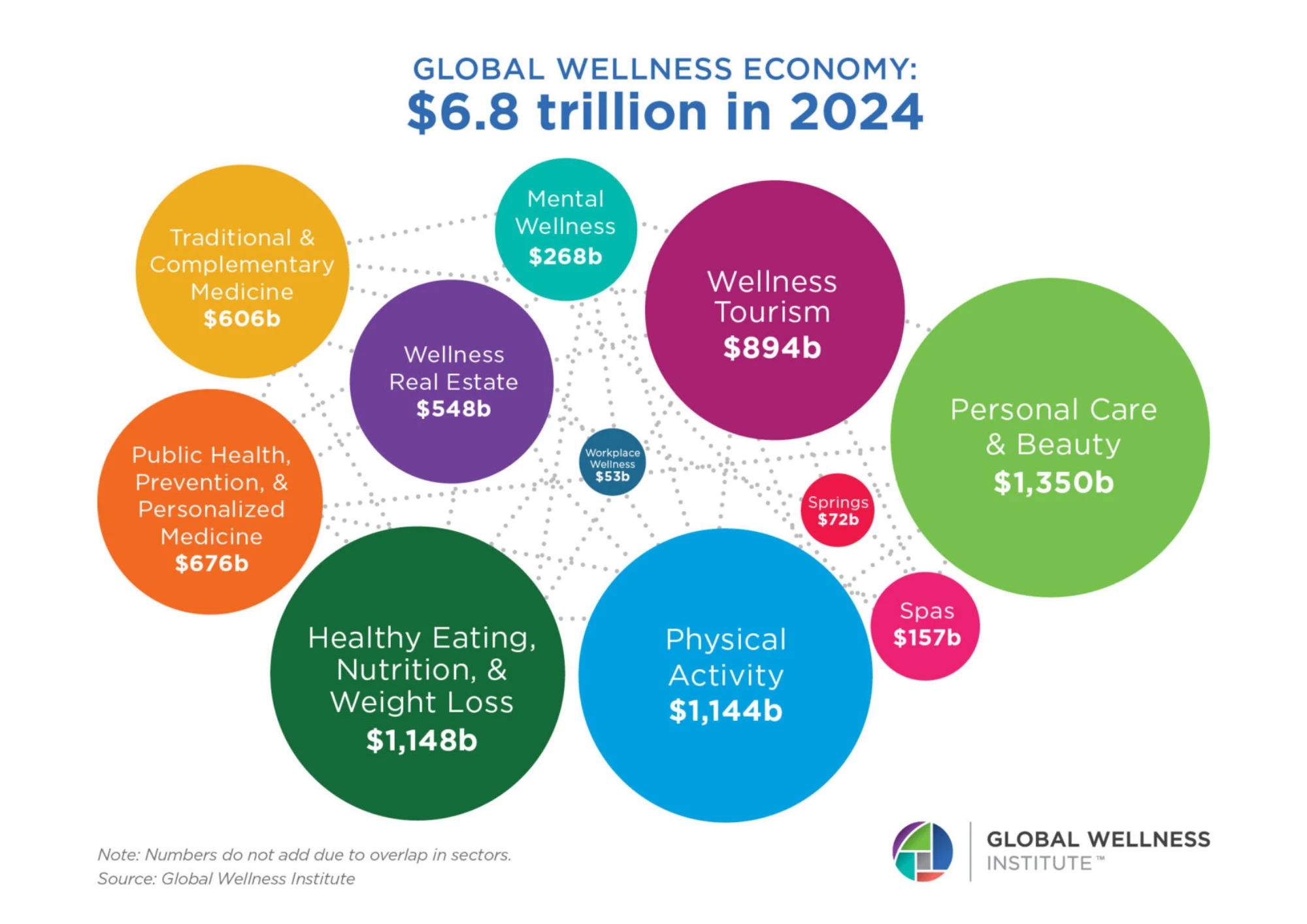
Wellness tourism is no longer an offering for the rich and luxury loving. Global demand for mental wellness, nature immersion, mindfulness retreats, and holistic experiences is surging. The global wellness economy was valued at US$6.8 trillion in 2024 and is projected to reach US$9.8 trillion by 2029, is driving growth in wellness-focused tourism, including spas, retreats, and wellness real estate (Global Wellness Institute, 2025).
Africa’s landscapes, from highland forests to coastal lagoons, offer ideal foundations for purpose-built wellness destinations. Some resorts, however, treat wellness as a secondary amenity rather than a core product. Developing wellness tourism that integrates local healing traditions, herbal and indigenous knowledge, communal wellness practices, and ecological sustainability can differentiate African destinations and their wellness offerings globally. This requires trained practitioners, certification standards, and deliberate infrastructure planning.
The global wellness economy market is projected to grow to as high as US$9.8 trillion by 2029. Africa’s landscapes, wellness practices, and herbal knowledge are suited to tap into this growing market.
Image Credit: Global Wellness Economy Growth Projections from 2013-2029 (Global Wellness Institute)
Digital mobility and changing traveler preferences are also redefining demand: Generational shifts, hybrid work trends, and remote mobility are influencing how, when, and why people travel, creating opportunities for innovative products, infrastructure, and policy interventions. Recent data on European travel patterns (notably France, Germany, and the UK) observed by a study by the European Travel Commission show distinct generational preferences: younger travelers seek affordability and spontaneity; midlife travelers balance work and leisure; older cohorts prioritize comfort, wellness, and cultural enrichment. As Africa’s middle class grows, similar segmentation is likely to emerge.
This is a leading indicator for Africa. As Africa’s middle class grows, similar patterns may begin to emerge. One-size-fits-all tourism products may struggle to retain relevance. Businesses and destinations can key into this growing trend by segmenting their offerings: budget-friendly, experience-rich stays for Gen Z; flexible, mid-tier wellness or cultural packages for Millennials and Gen X; and premium, all-inclusive heritage or nature retreats for older travelers. Tourism operators will need tailored experiences that account for life stage, digital behavior, and spending power. Mobile-first booking, flexible pricing, and curated itineraries will be essential to capture the emerging cross-generational demand effectively.
Implications and Lessons for Stakeholders
De-seasonalize leisure and hospitality investments by designing facilities for multi-purpose use to smooth revenue across the calendar.
Develop wellness tourism as a primary product by integrating local traditions, ecological principles, and global standards to create distinctive, authentic experiences.
Segment tourism products by life stage and digital behavior, using mobile-first platforms to deliver flexible, personalized, and experience-rich offerings.
October reiterated a compelling narrative across tourism markets: Africa is accelerating through cultural capital and conservation-led experiences, even as global pressures such as rising operational costs, climate volatility, and workforce shortages reshape the sector.
For policymakers, investors, and industry stakeholders, here are three (3) key takeaways defining this momentum:
Authenticity is emerging as the new premium: Africa’s competitive edge in tourism continues to lie in its cultural and ecological distinctiveness, from Lagos’s mangroves to South Africa’s design-forward accommodation. The most valuable opportunities are now tied to investments that deepen local identity rather than replicate global templates.
Conservation and culture function as economic infrastructure. Wildlife protection, mangrove restoration, and heritage stewardship are no longer soft concerns. They form the basis of investor confidence, visitor trust, and long-term revenue. When these assets weaken, as seen in Etosha or in the delayed opening of MoWAA, entire tourism economies feel the impact.
Operational resilience must be embedded in strategy. Climate shocks and labour shortages are baseline risks. Sustainable growth requires integrating ecological safeguards and human capital planning into business and policy frameworks. These are not optional add-ons. They influence performance.
Nigeria: Regulation and Cultural Capital
The passage of the Endangered Species Conservation and Protection Bill in October 2025 marks a significant step in positioning Nigeria as a credible steward of biodiversity. With fines of up to ₦12 million, potential jail terms of 10 years, and expanded enforcement powers for Customs, the law aligns Nigeria with global conservation standards. This is especially urgent given the precarious status of Nigeria’s wildlife, some of which are endangered. While exact, up-to-date numbers are difficult to pinpoint, Nigeria has fewer than 300 Cross River gorillas, fewer than 34 West African lions, and fewer than 200 West African forest elephants. Pangolins, manatees, and the African wild donkey are just some of the country’s critically endangered species.
For tourism and hospitality stakeholders, as well as biodiversity conservation enthusiasts, this legal framework will enhance Nigeria’s appeal to environmentally conscious travelers and investors such as the World Wildlife Fund (WWF). The test now lies in consistent field-level implementation. Practical measures such as community monitoring teams, digital tracking tools for wildlife corridors, and routine enforcement reports will strengthen transparency and credibility. Without these, the deterrent value of the law risks remaining theoretical rather than operational.
Lagos’s successful hosting of Africa’s first E1 Electric Powerboat Race in October 2025 demonstrated Nigeria’s capability to host sustainability-focused global events. Beyond its spectacle, the event carried a deeper strategic intent: to spotlight the urgent need for mangrove restoration across West Africa’s coastal region. Over 30 per cent of Nigeria’s mangroves have disappeared in the past three decades due to expansion, pollution, and logging. Ecosystems have been washed away, and livelihoods have been lost.
But recently, hope has begun to take root again: communities in places like Ogoniland are demanding restoration; young mangroves are now being replanted to allow for the full restoration of the environment. The E1 event’s sustainability narrative retains meaning only if it inspires local stewardship. This requires community-led restoration programmes involving fishermen, youth groups, and women’s cooperatives. For investors, it also opens opportunities for mangrove-based ecotourism, for instance, guided kayak trails and environmental education tours that support regeneration.
The Museum of West African Art (MoWAA) stands complete in Benin City, yet remains underutilized due to unresolved disagreements among traditional leaders, government agencies, and cultural custodians.
Image Credit: MoWAA Website
A challenge remains in Benin City, where the dispute surrounding the launch of the Museum of West African Art (MoWAA) has slowed its emergence as a major cultural destination. Although the building is complete, the absence of alignment among traditional institutions, government bodies, and cultural custodians continues to limit public access. The situation illustrates a recurring issue in heritage projects: insufficient early consensus among stakeholders. Broader and early engagement with legitimate stakeholders, anchored in public education and cultural access, may have prevented current tensions. The way forward is collective focus on legacy, shared ownership, and public value.
Africa: Growth in South Africa, Climate Vulnerability in Namibia
South Africa’s hospitality sector is on a robust growth path, with market value expected to rise from US $11.49 billion in 2025 to US $15.64 billion by 2030. Niche, experience-led products such as boutique hotels, serviced apartments, and culturally driven design are driving this expansion. The trend highlights a broader continental opportunity. African hospitality can compete globally by elevating local identity and strengthening operational quality. Investors are already responding to design-led stays that weave in local art, cuisine, and storytelling, proving that “local” can also be premium. Growth will, however, depend on avoiding the dilution of cultural character and ensuring local talent is integrated, trained and upskilled into management and ownership.
Over one-third of Etosha National Park’s habitat was lost to wildfire, threatening a tourism economy that relies on the park for nearly 30% of its revenue.
Image Credit: Elephants drink at a waterhole in Etosha National Park. (AP Photo)
Conversely, Namibia’s recent wildfire in Etosha National Park in September 2025 which destroyed over one-third of its ecosystem, exposed a stark vulnerability. With tourism projected to face a two to three-year recovery period, the incident underscores how climate shocks can rapidly erode natural capital that underpins entire economies. Etosha contributes almost 30 per cent of Namibia’s tourism revenue, which means the impact will stretch across employment, foreign exchange, and conservation financing. The lesson is clear. Conservation tourism cannot rely on reactive protection. Early warning fire systems, rapid-response community teams, diversified water management, and ecological corridors form the foundation of investor confidence and long-term resilience.
Global: Tourism’s Looming Workforce Crisis
The World Travel and Tourism Council’s projection of a 43 million worker shortfall by 2035, despite the sector creating 91 million new jobs, reveals a deep structural mismatch in global labor markets. This is a systemic imbalance driven by aging populations, shifting worker preferences, and accelerating demand that outpaces talent pipelines. The shortfall is most acute in high-growth markets like China and India, where rising middle-class travel and digital-native expectations are increasing pressure on service delivery. Yet many former hospitality workers have not returned, drawn instead to sectors offering better wages, stability, or remote flexibility.
For business leaders in Africa, the response should not be limited to recruiting more to balance the cycle of incoming and outgoing talent in the industry. Sustainable staffing will require redefining the value proposition of working in the hospitality, travel, and tourism industry through competitive compensation, clear career progression paths, and targeted upskilling that elevates roles beyond transactional tasks.
This means aligning training and development with emerging skill demands across roles. At the managerial and executive level, critical thinking and analytical skills are already important, but greater proficiency is needed, especially as creative thinking is expected to grow significantly in relevance. In customer-facing roles, leadership and management capabilities will become increasingly vital, yet current proficiency remains low. For operational roles, reliability and detail orientation, along with flexibility and resilience, are seen as highly important.
Hospitality and tourism businesses in Africa will need to rethink their workforce strategy to address the deepening global talent gap. Offering fair pay, competitive benefits, meaningful career pathways, and role-specific upskilling can position tourism work as purposeful and future-ready. Technology and automation can ease pressure in back-office functions, but frontline experiences will always depend on human connection. The winners will be those who treat workforce investment not as a cost centre, but as a core driver of customer experience and brand resilience.
Excerpt from WTTC Report showing the fastest growing skills, and current most proficient and important skills for managerial and executive level workers in the global tourism industry.
Implications and Lessons for Stakeholders
Stronger conservation laws enhance Nigeria’s eco-tourism positioning, but they require consistent enforcement. Community rangers, digital monitoring, and transparent reporting are essential.
High-profile events such as the E1 Race can drive ecological action. Partnerships with coastal communities will strengthen mangrove restoration and add value to ecotourism offerings.
Cultural projects like MoWAA require early and inclusive alignment to avoid strategic bottlenecks. Shared access, education, and cultural value should guide future decisions.
African hospitality will benefit from locally grounded, premium guest experiences. Scaling must not dilute cultural identity or exclude local professionals.
Climate and workforce risks should be integrated into all investment and operational plans. Adaptation systems, fair compensation, and talent development will determine long term sustainability.
Picture two destinations. Both have stunning coastlines, rich cultural heritage, and communities eager for economic opportunity. Both invest heavily in tourism masterplans, comprehensive documents outlining their path to becoming world-class destinations.
Five years later, one has transformed. New hotels thoughtfully dot the landscape, local artisans sell their crafts to engaged visitors, and young people have meaningful employment in the hospitality and tourism industry. The other remains largely unchanged, its masterplan gathering dust on the shelves in government offices.
What made the difference?
The Masterplan Mirage
Here’s what most people get wrong: they think having a masterplan guarantees tourism development. It doesn’t. A masterplan is simply potential energy – it needs the will and systems to implement it.
We have seen this pattern repeatedly across Africa and beyond. Destinations spend months crafting elaborate visions, complete with glossy renderings and ambitious timelines. Then they file the document away and wonder why transformation never comes.
The launch of the masterplan, whilst important, is not the destination; it is the roadmap. And like any roadmap, it only works when you actually start driving.
What Makes a Tourism Masterplan Actually Work
At its essence, a tourism masterplan is a strategic blueprint for destination evolution. The best ones span 10 years and capture not just where a destination wants to go, but precisely how it will get there, and most importantly, how it will know when it arrives.
For us at Red Clay, tourism development must improve the quality of life for host communities. If it does not create meaningful work, better infrastructure, and renewed pride in local heritage, then what has been the point of the tourism development efforts?
A robust masterplan addresses six critical areas:
Tourism product development: What experiences will visitors have?
Destination development: How will physical spaces evolve?
Infrastructure: What foundational systems need upgrading?
Human resources: How will locals be trained and employed?
Marketing: How will the destination reach its ideal visitors?
Risk management: What could go wrong, and how will you respond?
Why do most masterplans fail? They are not treated as actionable commitments.
The Secret Sauce: Accountability in Action
After working with destinations across multiple continents, we have identified what separates transformation success stories from expensive planning exercises.
The secret sauce isn’t brilliant strategy alone, although this matters too. No it is not stakeholder buy-in or adequate funding (although these are essential too).
The secret sauce is accountability: having specific targets and actually doing what you have committed to do.
Successful destinations create dashboards tracking concrete metrics: jobs created, visitor numbers, average spend, infrastructure projects completed. They report progress publicly, adjust course when necessary, and treat their masterplan as a living document that guides daily decisions.
Think of Google Maps. The app doesn’t just show you where to go; it tracks your progress, recalculates when you take a wrong turn, and updates you on arrival time. The tourism masterplan should work the same way.
The ‘secret spice’ in effective tourism masterplan development and implementation is accountability, knowing what you are responsible for and have committed to, doing it, and following up to monitor and ensure that targets are met.
Image Credit: Barnabas Sani/ Pexels
Context Is Everything
What transforms the Volta Region in Ghana won’t necessarily work in Ekiti State, Nigeria. While destinations can learn from each other’s experiences, each requires its own carefully calibrated approach.
This is particularly crucial for African destinations, where the temptation often exists to impose external models rather than enhance what already exists. The best masterplans enhance, rather than change a destination’s essence.
Consider the difference between these approaches:
Generic strategy: Build luxury resorts to attract international visitors
Context-specific strategy: Develop community-based eco-lodges that showcase traditional architecture while providing employment for local craftspeople and guides
One treats the destination as a blank canvas. The other recognizes it as a living, breathing community with its own strengths to build upon.
The Implementation Gap
Most destinations are better at planning than implementing. Beyond the launch of the masterplan is the hard, long work of tracking progress, adjusting strategies based on results, and holding stakeholders accountable for commitments.
Effective implementation requires:
Strong governance: Someone needs to be in charge, with authority to make decisions and allocate resources
Multi-stakeholder collaboration: Government, private sector, and communities must work together consistently, not just during planning phases
Regular monitoring: Monthly or quarterly reviews, not annual check-ins
Public reporting: Transparency creates accountability
Adaptive management: The willingness to change course when data shows that progress is off track
The Policy Foundation
A masterplan requires a supportive tourism policy. Government needs clear frameworks for decision-making, streamlined processes for tourism investment, and consistent messaging about development priorities.
This policy foundation ensures that when private investors or development partners want to engage, they understand the rules and can move efficiently toward shared goals.
The five core requirements of effective masterplan implementation. Masterplans are living documents that can take a destination’s strengths and help them truly shine, but without these requirements, the masterplan risks remaining a document on the shelf
Image Credit: Red Clay
Making Destinations Sing
The best tourism masterplans work like a perfect spice blend, they enhance what is already there without overpowering it. They take a destination’s existing strengths and help them truly shine.
When done right, master-planning creates a virtuous cycle: better experiences attract more visitors, generating revenue that funds infrastructure improvements, creating jobs that keep young people in their communities, building pride that motivates further investment in local heritage and natural resources.
But “done right” means more than smart strategy. It means treating the masterplan not as a finish line but as a starting point. The moment when real work begins.
The question is not whether your destination needs a tourism masterplan. The question is how prepared you are to implement it. In tourism development, as in cooking, having the recipe is not enough. The magic happens when you actually turn on the heat.
Privacy Statement
At Red Clay, we respect your privacy and are committed to protecting the information you share with us. This statement outlines our approach to user data, confidentiality, and content featured on this website.
Use of Images and Media
Photographs, videos, and other visual materials displayed on this website are used strictly for illustrative and educational purposes. Red Clay does not claim ownership of all such images unless otherwise stated. All rights remain with the original creators or copyright holders. If you believe that your image or content has been used inappropriately, please contact us and we will promptly address the matter.
Confidentiality and User Data
When you visit our website, sign up for newsletters, or engage with us, we may collect limited personal information (such as your name, email address, or organisation).
This information will only be used for the purposes you consent to—for example, responding to inquiries, sharing updates, or improving our services.
We do not sell, rent, or disclose your personal information to third parties without your consent, except where required by law. All data is kept confidential and is handled with appropriate security measures.
Cookies and Analytics
Our website may use cookies or analytics tools to track general usage patterns, such as page visits and time spent on the site. This information is used to improve user experience and is not linked to personally identifiable data.
Your Consent
By using our website, you consent to the terms of this Privacy Statement. Updates to this statement will be posted here, and continued use of the website after changes are made will indicate your acceptance of those changes.
Contact Us
If you have any questions or concerns about this Privacy Statement or the use of your data, please reach out to us at: tourism at redclayadvisory dot com