Turning Momentum into Opportunity
Diaspora Investment, Wellness Growth, and Africa’s Emerging Experience Economy
November reflected a tourism landscape in transition. Diaspora backed investment in leisure and hospitality facilities in Nigeria, particularly in Lagos, has increased. Global wellness markets continue to expand, and digital nomadism is reshaping urban hospitality across Africa. These trends raise strategic questions: Can seasonal booms be converted into sustainable, year-round economies? And can African destinations evolve from passive backdrops to intentional, experience-driven wellness economies?
Key Takeaways
- Diaspora capital is driving growth in Nigeria’s leisure and hospitality sector, particularly in Lagos, but activity remains highly seasonal.
- Reduced outbound education and medical tourism presents a window to upgrade domestic services.
- Global trends such as wellness tourism and digital nomadism offer high-value opportunities if infrastructure, regulatory support, and strategic planning align.
Nigeria: Diaspora Investments and Domestic Medical/Educational Tourism Opportunity
Investment in leisure and hospitality in Lagos is expanding, encompassing entertainment facilities, restaurants, bars, lounges, self-serviced apartments, boutique hotels, and small scale resorts. Demand for hospitality facilities and services peak during the Detty December festive season, driven by returning diaspora and local travelers, creating both high revenue potential and intense seasonal pressure.
This growing investor interest is facilitated by Lagos State’s relatively investor-friendly regulatory framework, which has enabled diaspora entrepreneurs to participate in leisure infrastructure development. However, while festive-season peaks generate visibility and short-term gains, sustaining occupancy and revenue during off-peak periods remain a challenge. Outside this window, visitor volumes decline, and within this window, current leisure offerings are mostly targeted towards young adults, nightlife lovers, and the ‘I Just Got Back’ (IJMB) seasonal diaspora returnees in December. The broader question, not just for investors and business owners but also for public-sector stakeholders who create the necessary policy reforms and an enabling environment, is how to convert this episodic end-of-year enthusiasm into more robust, year-round programming and economic activity.
Even more importantly, how can we expand this end-of-year festive culture beyond Lagos and build more intentional programming and infrastructure across multiple states and cities, and position Nigeria as a year-round tourism destination, and not just Lagos as an enclave for Detty December?
For leisure and hospitality in Lagos, and by extension Nigeria, to thrive beyond seasonal surges, they may benefit from diversified programming, such as school excursions, corporate events, or wellness activations, that smooth demand across the calendar year. This will include aligning offerings with the seasons, weather patterns, traveler interests, and key cultural or heritage months, all curated through the lens of local context and community identity. Developing multi-purpose facilities capable of hosting year-round programmes that appeal to people of all ages and backgrounds, as well as improving tourist infrastructure across the country, can also help diversify revenue and justify further investment.

Image Credit: BBC (The Plug Entertainment)
Africa’s Growing Digital Nomad Market
Urban African destinations are increasingly attractive to global digital nomads, drawn by reliable air connectivity, internet speed, cultural richness, and affordability. Cities like Cape Town, Marrakech, Nairobi, and Egypt’s coastal cities are gaining traction as global digital nomad destinations, offering a mix of connectivity, culture, and cost. Yet most of these remote workers come from outside Africa: Europe, North America, the Middle East, and Asia. Intra-continental mobility for African professionals remains constrained by visa regimes, uneven internet reliability, and limited regional air links.
Seven of the top 10 cities for digital nomads in Africa are in North Africa, with Egypt alone accounting for four. In sub-Saharan Africa, only Senegal represents West Africa, and Kenya represents East Africa. This signals a significant gap and opportunity for other African countries.

Digital nomads need more than reliable internet, seamless travel, and coworking spaces to be drawn to destinations; they are attracted to the authentic culture, lifestyles, and hospitality of the host community. If a destination offers little beyond what they would usually find back home, this would not be a compelling reason for them to travel. To attract this growing market, sub Saharan African cities will need to be more intentional: rather than design foreign hospitality offerings to capture digital nomads, the focus should be on authenticity, affordability, and meaningful immersive experiences.
Of course, it goes without saying that dependable digital infrastructure, tourist service facilities, and improved transport connectivity are non-negotiables.
Beyond this group, there are also African tech workers and entrepreneurs who are able to live and experience different parts of the continent whilst working remotely. Investors can consider creating integrated live-work-play environments in cities, combining coworking spaces, extended-stay accommodations, and affordable and attractive tourism and lifestyle experiences for digital nomads from Africa, not just from outside of Africa. The governments will have a role to play: coordinated and streamlined visa policies, improved internet reliability and digital connectivity, and visitor safety to enable intra-African professional mobility, ensuring that African talent benefits alongside global remote workers.

Image Credit: A seaside outdoor restaurant in Cape Town, South Africa (Girl on a Zebra)
Global: The $6.8 Trillion Wellness Economy and Generational Travel Trends
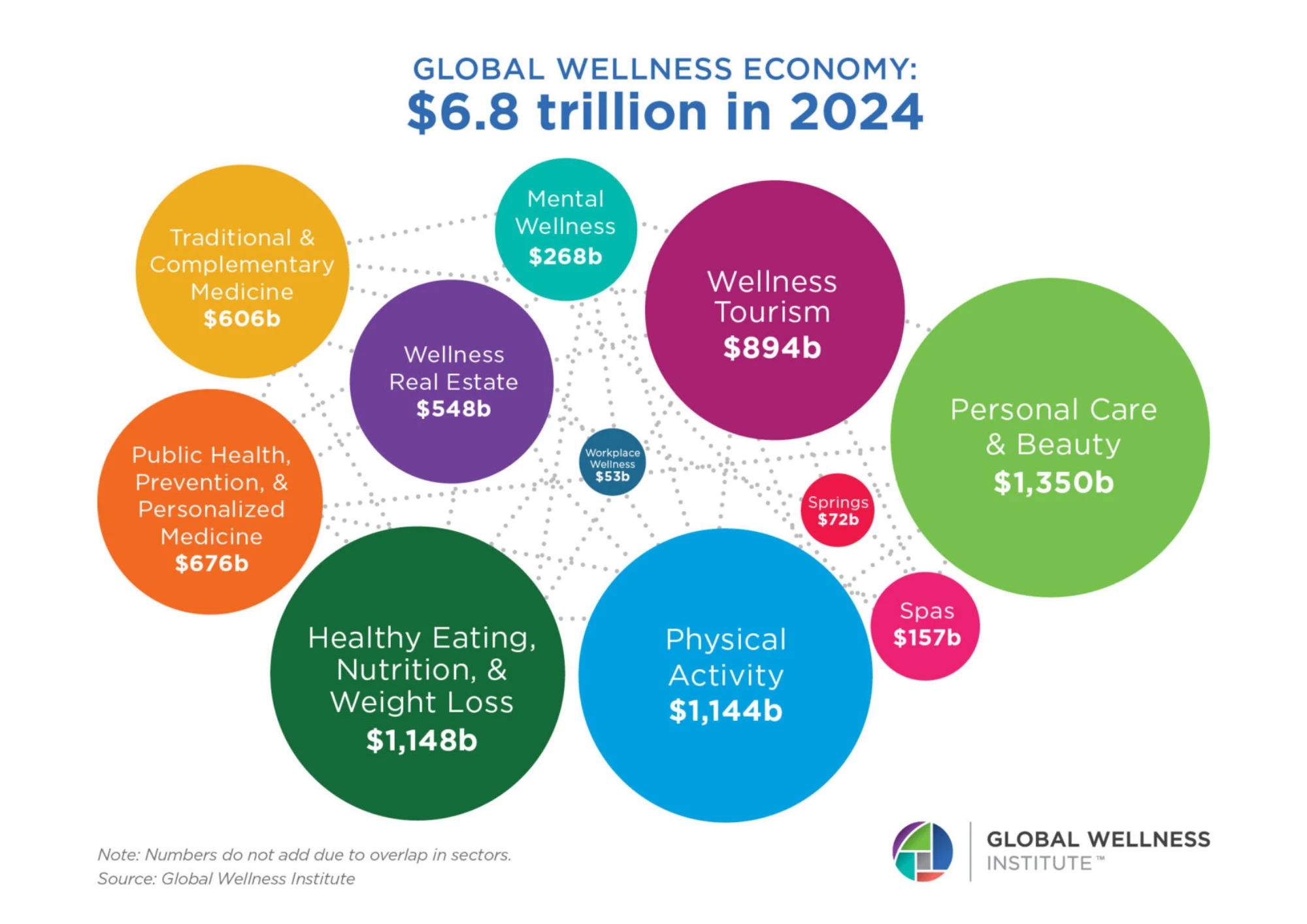
Wellness tourism is no longer an offering for the rich and luxury loving. Global demand for mental wellness, nature immersion, mindfulness retreats, and holistic experiences is surging. The global wellness economy was valued at US$6.8 trillion in 2024 and is projected to reach US$9.8 trillion by 2029, is driving growth in wellness-focused tourism, including spas, retreats, and wellness real estate (Global Wellness Institute, 2025).
Africa’s landscapes, from highland forests to coastal lagoons, offer ideal foundations for purpose-built wellness destinations. Some resorts, however, treat wellness as a secondary amenity rather than a core product. Developing wellness tourism that integrates local healing traditions, herbal and indigenous knowledge, communal wellness practices, and ecological sustainability can differentiate African destinations and their wellness offerings globally. This requires trained practitioners, certification standards, and deliberate infrastructure planning.

Image Credit: Global Wellness Economy Growth Projections from 2013-2029 (Global Wellness Institute)
Digital mobility and changing traveler preferences are also redefining demand: Generational shifts, hybrid work trends, and remote mobility are influencing how, when, and why people travel, creating opportunities for innovative products, infrastructure, and policy interventions. Recent data on European travel patterns (notably France, Germany, and the UK) observed by a study by the European Travel Commission show distinct generational preferences: younger travelers seek affordability and spontaneity; midlife travelers balance work and leisure; older cohorts prioritize comfort, wellness, and cultural enrichment. As Africa’s middle class grows, similar segmentation is likely to emerge.
This is a leading indicator for Africa. As Africa’s middle class grows, similar patterns may begin to emerge. One-size-fits-all tourism products may struggle to retain relevance. Businesses and destinations can key into this growing trend by segmenting their offerings: budget-friendly, experience-rich stays for Gen Z; flexible, mid-tier wellness or cultural packages for Millennials
and Gen X; and premium, all-inclusive heritage or nature retreats for older travelers. Tourism operators will need tailored experiences that account for life stage, digital behavior, and spending power. Mobile-first booking, flexible pricing, and curated itineraries will be essential to capture the emerging cross-generational demand effectively.
Implications and Lessons for Stakeholders
- De-seasonalize leisure and hospitality investments by designing facilities for multi-purpose use to smooth revenue across the calendar.
- Develop wellness tourism as a primary product by integrating local traditions, ecological principles, and global standards to create distinctive, authentic experiences.
- Segment tourism products by life stage and digital behavior, using mobile-first platforms to deliver flexible, personalized, and experience-rich offerings.