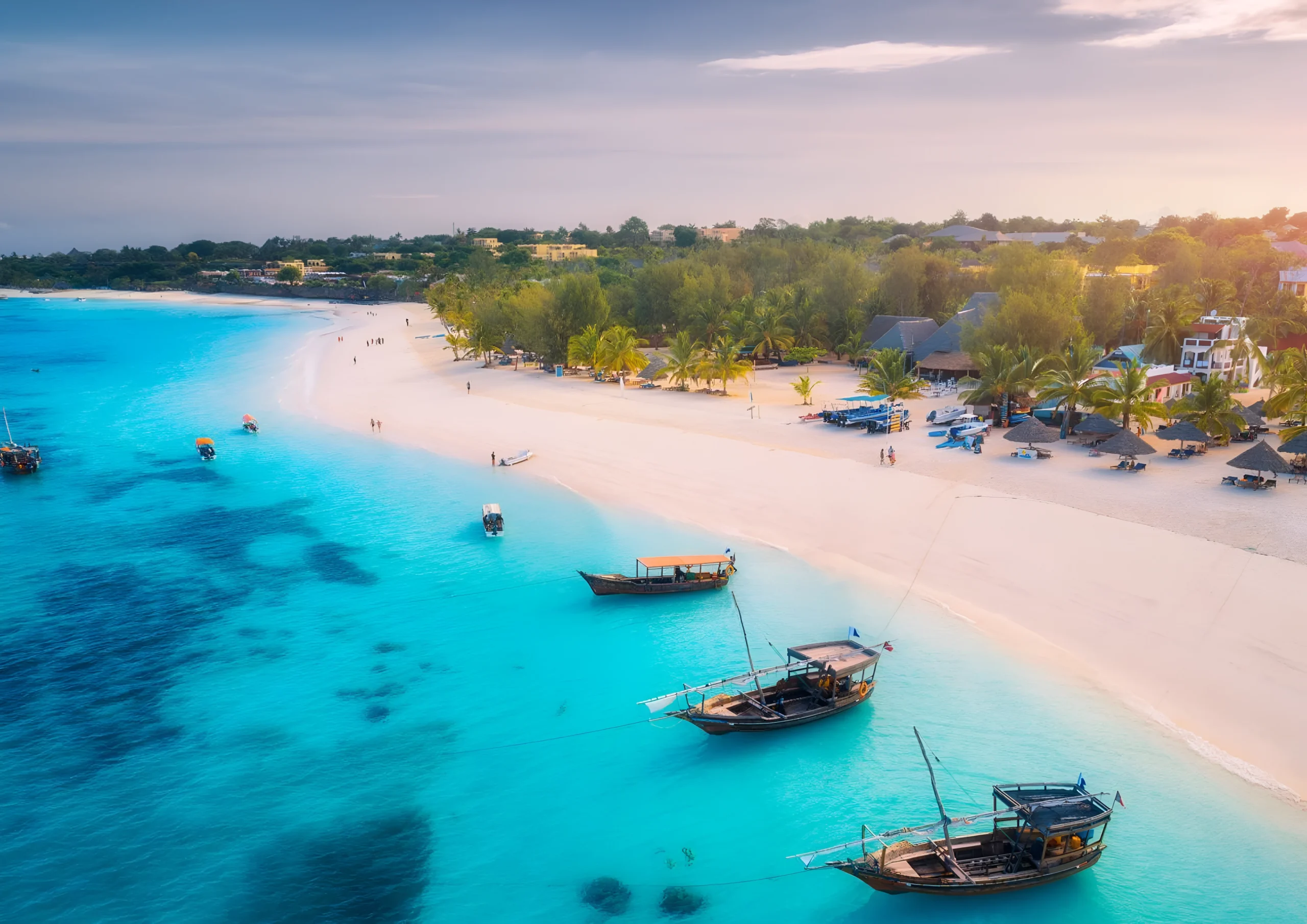
The annual flagship analysis. Pillar-by-pillar assessment of destination investment readiness using Red Clay’s five-pillar framework: connectivity, hospitality capacity, workforce readiness, safety, and brand reputation.
What We Mean by Development Ecosystem Strategy and Why It Changes Everything
A destination is the system that determines whether assets such as heritage sites, festivals, national parks or even a resort generates sustained economic value.
This distinction is where our work at Red Clay begins.
Most conversations about tourism development in Africa start with attractions, arrival numbers, and hotel beds. These are reasonable things to measure, but they are outputs of a functioning system, not the system itself. When they become the primary focus of strategy, the result is investment that underperforms, infrastructure that sits underutilised, and tourism growth that is narrower and more fragile than it needs to be.
The pattern is consistent. A new hotel opens in an area with unmotorable roads, an underskilled hospitality workforce, and no coherent destination brand. Operations run below capacity. The supply chain imports rather than sources locally. The economic multiplier (the ripple of spending that should move through the local economy) leaks out rather than circulates. What is happening? The attraction exists, the investment arrived, but the ecosystem was not there to receive it.
Development ecosystem strategy addresses the conditions.
It works across five interconnected dimensions:
connectivity, which determines whether a destination can be reached at competitive cost;
hospitality capacity, which determines whether the accommodation and services infrastructure can support visitor demand;
workforce readiness, which determines whether the skills exist locally to deliver quality experiences;
safety and governance, which shapes the risk perception that drives investor and visitor behaviour;
and brand and reputation, which determines how a destination is understood and evaluated by the people whose decisions matter most.
In the ecosystem, no single dimension works in isolation. A destination with excellent connectivity but weak workforce readiness will attract visitors it cannot serve well. Strong hospitality stock without brand clarity is invisible to the investors and travelers most likely to value what it offers. A destination with all five dimensions functioning coherently becomes a place where investment and development decisions are easier to make, returns are more predictable, and tourism generates economic value that extends well beyond the sector itself.
This is what investment readiness actually means. This readiness goes beyond a marketing campaign or the development of a masterplan. It requires a system in which the conditions for sustained economic activity exist and are visible to capital. This is why we describe our work as development ecosystem strategy rather than tourism consultancy.
Tourism consultancy produces recommendations for the tourism sector. Development ecosystem strategy produces the conditions for a destination’s economy to work, over the long-term. Tourism is the vehicle, the sector through which connectivity, capacity, workforce, safety, and reputation are built and tested. But the question we bring to every engagement goes beyond how to improve visitor numbers. It is how do we make this place more competitive, more resilient, and more worth investing in, for residents, for businesses, and for the institutions that allocate capital across the continent?
Africa has numerous destinations worth investing in but the ecosystem infrastructure that makes these destinations valuable and accessible for investment and development is missing.
December 2025 produced three developments that, read separately, each tell a partial story. Read together, they raise a single question that cuts across all of them: when tourism growth arrives in Africa, who captures it, and who absorbs its costs?
In Lagos, sections of Makoko were demolished under urban renewal justifications, displacing thousands of residents without adequate resettlement. In East and Southern Africa, domestic travelers quietly outperformed international markets in revenue contribution. And globally, cultural tourism continued its evolution from passive observation toward immersive participation, driven by demand that Africa is positioned to serve but has not yet systematically packaged.
These stories are three expressions of the same underlying challenge: Africa’s tourism growth is accelerating, but the systems designed to distribute its benefits and manage its costs remain underdeveloped.
The City and the Waterfront: What Makoko Reveals About Urban Tourism Strategy
Between December 2025 and early January 2026, targeted sections of Makoko, the riverine community along the Lagos Lagoon on mainland Lagos, were demolished. Thousands of residents were displaced. Civil society groups argued the demolitions violated international human rights standards. The government cited public safety risks from power lines. Whatever the legal justification, the outcome is consistent with a pattern that urban development research documents across rapidly urbanising cities: forced evictions rarely resolve the structural conditions that produce informal settlements. They merely relocate them.
Lagos faces a choice: treat waterfront communities as obstacles to development, or as permanent parts of the city with economic and cultural value that formal planning has not yet learned to capture.
While the rest of the world engaged in the December festivities, Makoko, a riverine community on the shores of Lagos Mainland, had sections targeted for demolition.
Image Credit: New York Times (Photography by Taiwo Aina)
Slum dynamics persist because they emerge from structural factors that include rural-urban migration driven by economic opportunity, insufficient affordable housing, weak land tenure, and informal labour markets that absorb workers essential to urban economies. When demolition proceeds without parallel provision of affordable housing, land tenure reform, or livelihood planning, the phenomenon surfaces in another part of the city within years.
The instructive comparisons are not hypothetical. Rio de Janeiro’s Favela-Bairro programme, implemented between 1994 and 2008, installed basic infrastructure; water, sanitation, electricity; within favelas. Land tenure was formalized and community centres and healthcare facilities were built within settlements. Some favelas in Rio’s South Zone, including Rocinha and Vidigal, subsequently developed tourism economies: guided tours, community-led cultural experiences, small hospitality ventures, and short-term rentals generating income that stayed, at least partially, within the community. Benefits are uneven and not all revenues remain local. But the model demonstrates that informal waterfront settlements can generate economic value when planned for rather than periodically cleared.
A picture of the favelas in Rio de Janeiro, Brazil
Image Credit: Where in Rio and Beyond
Benin’s Ganvié offers a different register. Built on stilts over Lake Nokoué, home to approximately 20,000 residents and now on UNESCO’s Tentative List of World Heritage Sites, Ganvié demonstrates how a water-based settlement can evolve into a cultural heritage destination while remaining a functioning community. Fishing and local trade remain central to daily life, while tourism provides supplementary income. The settlement faces infrastructure and environmental pressures such as water quality, structural maintenance and sanitation, but it has been planned for, rather than cleared.
Makoko’s viability as a comparable destination depends on whether Lagos is willing to make the investment that transformation requires: formalised tenure, basic infrastructure, environmental management, and a planning framework that incorporates rather than periodically removes. Without these, demolition produces visible action without durable change. Residents may relocate to equally vulnerable sites but the underlying housing demand remains unresolved and the structural pressures will resurface elsewhere in the city.
Lagos promotes creativity, tourism, and lifestyle branding. It has not yet decided whether the communities that define its waterfront character belong in that story.
A hotel stilt building in Ganvié, Benin. Ganvié formalized its informal floating village community and was listed on UNESCO’s Tentative World Heritage List. Can Lagos do the same for Makoko?
Image Credit: Beata Tabak/ArchDaily
The Data That Changes the Argument: Africa’s Domestic Tourism Revenue
Kenya’s national parks recorded over 313,000 visitors in December 2025. Domestic tourists accounted for 231,000 of them, nearly three times the 82,500 international visitors. The Kenya Wildlife Service’s framing was deliberate: local travellers form the backbone of the country’s tourism economy.
Across Africa’s largest tourism markets, the revenue data contradicts the dominant policy assumption that international arrivals are the primary engine of tourism income.
Sources: WTTC Economic Impact Reports, Ghana Tourism Authority, Tanzania Tourism Sector Survey Reports, OECD Tourism Trends and Policies 2024, Ministry of Natural Resources and Tourism Statistical Bulletin
In South Africa, domestic tourism spending reached approximately R430 billion in 2024, nearly four times the R116.5 billion generated by international visitors. In Kenya, domestic spending exceeded international receipts by more than 80 per cent. In Nigeria, the gap is more pronounced still: domestic tourism generated ₦5.35 trillion against ₦655 billion from international arrivals, a ratio of more than 8:1.
The picture inverts in North Africa. Egypt’s international tourism generated EGP 726.9 billion against EGP 449.9 billion in domestic spending. Morocco follows a comparable structure, with infrastructure, marketing, and connectivity heavily oriented toward European and regional international markets. Both countries have built tourism economies that perform well under stable global conditions and contract sharply when conditions shift. Morocco’s international receipts fell by more than 50 per cent in 2020. The structural exposure is documented and consistent.
The assumption that international arrivals are Africa’s primary tourism revenue engine is not supported by the data from the continent’s largest markets. In several of them, it has not been true for years.
What the data reveals is an underinvestment gap. Countries that built domestic tourism infrastructure with accessible pricing, internal mobility systems, year-round programming for local audiences, have developed internal markets that compete with or exceed international receipts. Yet tourism policy across much of the continent remains disproportionately focused on attracting foreign visitors through international branding and marketing campaigns aimed at European and North American source markets.
The strategic implication is to stop treating domestic tourism as fallback revenue and recognise it as the primary base it already is in several of Africa’s most significant tourism economies. Building this foundation requires sustained investment in internal mobility, accessible pricing that enables broader middle-class participation, and year-round product development that gives domestic travellers reasons to move within their own countries throughout the year.
Culture as Participation: The Conversion Gap Africa Has Not Yet Closed
China recorded 5.6 billion domestic trips and nearly 1.5 billion museum visits in 2024. Cultural tourism products such as heritage workshops, guided tours, culinary experiences, and living culture encounters surged in 2025 with double-digit growth in visitor orders and ticket sales.
The demand comes from travellers seeking cooking classes, calligraphy workshops, tea ceremonies, traditional clothing experiences, and homestays. These travellers desire hands-on engagement with heritage and daily life.
This pattern is not China-specific. UN Tourism estimates approximately 40 per cent of all international tourists now travel primarily to experience culture. Kayak’s 2026 travel research signals the same direction among younger travellers: small towns, rural areas, immersive cultural encounters, and destinations off the established circuit. The segment is large, growing, and willing to pay premium prices for experiences that feel genuine.
Africa’s position in this landscape is paradoxical. The continent possesses cultural assets with diverse ethnic traditions, musical heritage, textile crafts, culinary practice, archaeological sites, oral histories, living ceremonial culture, that are precisely what this demand is seeking.
Egypt has successfully commercialised its Pharaonic heritage at scale, with the Grand Egyptian Museum opening in November 2025 reinforcing its position as a global cultural destination. The Maasai communities of East Africa have developed cultural tourism that sustains both income and communal integrity. These are not isolated examples. They are proof that the demand can be met and the economic value can be captured.
Global demand for authentic, immersive cultural experiences is documented, growing, and largely unmet by African destinations.
Image Credit: Euromonitor International Travel Survey
Across most of the continent, cultural experiences remain informally organised, difficult to discover, and inconsistent in quality from a visitor’s perspective. A traveller willing to pay for a two-day immersive craft apprenticeship in a West African textile tradition cannot reliably find, book, or reach it through any platform that meets the expectations shaped by comparable experiences in Southeast Asia or Southern Europe. This is a structural and organizational gap.
Africa does not lack the culture that global demand is seeking. It lacks the packaging, the digital infrastructure, and the service consistency to convert that demand into economic value at scale.
Closing this gap requires three things working simultaneously. Training that equips cultural guides, artisans, and hospitality workers with interpretive skills and service standards, with care taken to ensure it is done without diluting authenticity. Digital infrastructure that allows travellers to discover and book cultural experiences through platforms that meet contemporary expectations. And community-led revenue models that ensure income reaches cultural practitioners directly, creating economic incentives for preservation.
Rural and heritage-based locations across the continent already appear on UN Tourism’s Best Tourism Villages list in recognition that the assets are present and the potential is understood internationally. Yet, it is the ecosystem infrastructure of service reliability, digital discoverability, physical access, trained personnel, that converts potential into performance.
That infrastructure is where the investment gap is most acute, and where it is most consequential.
Destinations like this already meet the conditions global travellers are looking for, but the infrastructure that makes them findable, bookable, and worth the journey does not yet exist at scale.
Image Credit: UN Tourism (2024)
What December’s Developments Tell Us
The three stories in this edition share a structural argument. Makoko is a story about who absorbs the costs of urban development that positions itself as tourism strategy. The domestic revenue data is a story about where tourism income actually comes from, and how misaligned policy investment has been with that reality. The cultural tourism gap is a story about a conversion problem: assets and demand exist on both sides, but the ecosystem infrastructure to connect them does not.
Lagos has a waterfront with genuine cultural and economic value. Africa’s middle class is already travelling and already spending at scale. The continent’s cultural heritage is precisely what the fastest-growing global tourism segments are seeking. The deficit is in the systems, the lack of planning frameworks, investment priorities, policy orientation, that determine whether value is captured broadly or narrowly, durably or not at all.
Tourism policy that focuses on international arrival numbers while underinvesting in domestic infrastructure, informal community integration, and cultural experience packaging is not building a resilient sector. Rather, it is building a sector that performs when conditions are favourable and contracts when they are not. The data from Africa’s strongest tourism economies already shows the alternative. The question is whether the policy follows.
Something transformative happens when industry leaders gather to solve problems together. Much more powerful than networking or knowledge sharing, is the form of collective intelligence that emerges, to truly move the needle forward in developing tourism that actually works for Africa.
Industry leadership goes beyond individual expertise or organizational success. It emerges when experienced practitioners, visionary thinkers, and passionate advocates create space to collectively address the challenges that no single organization can solve alone.
One thing is clear: Africa’s tourism potential cannot be unlocked by an individual or organization alone. It requires a cross-sectoral collective mission. When the industry improves for all, it results in immense returns for the ecosystem, and this includes the organizations and the individuals who work within it.
Our Test Case: The West Africa Tourism Roundtable
Red Clay is proud to have convened the West Africa Tourism Roundtable series as our test case for this principle. Hosted by our venue partners, Radisson Blu Anchorage on Victoria Island, we brought together hoteliers, tourism professionals, destination managers, entrepreneurs, and policymakers, demonstrating this approach in action. The success of these sessions owes much to Radisson Blu Anchorage’s exceptional hospitality and commitment to supporting industry dialogue.
Four years later, we are still receiving testimonials about the partnerships, collaborations and projects that emerged from those sessions. People still ask: “When is the next roundtable?”
The answer lies in understanding why convening matters, and the importance of bringing the right voices together around the right challenges at the right time.
The Magic of Sustained Focus
The West Africa Tourism Roundtable Series featured global industry leaders and practitioners, coming together with a clear objective, to unpack elements of tourism in post-COVID Africa, understanding that the recovery our industry needed, required a form of collective intelligence, to learn from others and to brainstorm on possibilities for the industry of the future.
Over five sessions in the course of one year (ambitious goal!), we were able to truly have sustained focus over a period of time that allowed participants to build on previous discussions, deepen relationships, and develop sophisticated approaches to complex challenges.
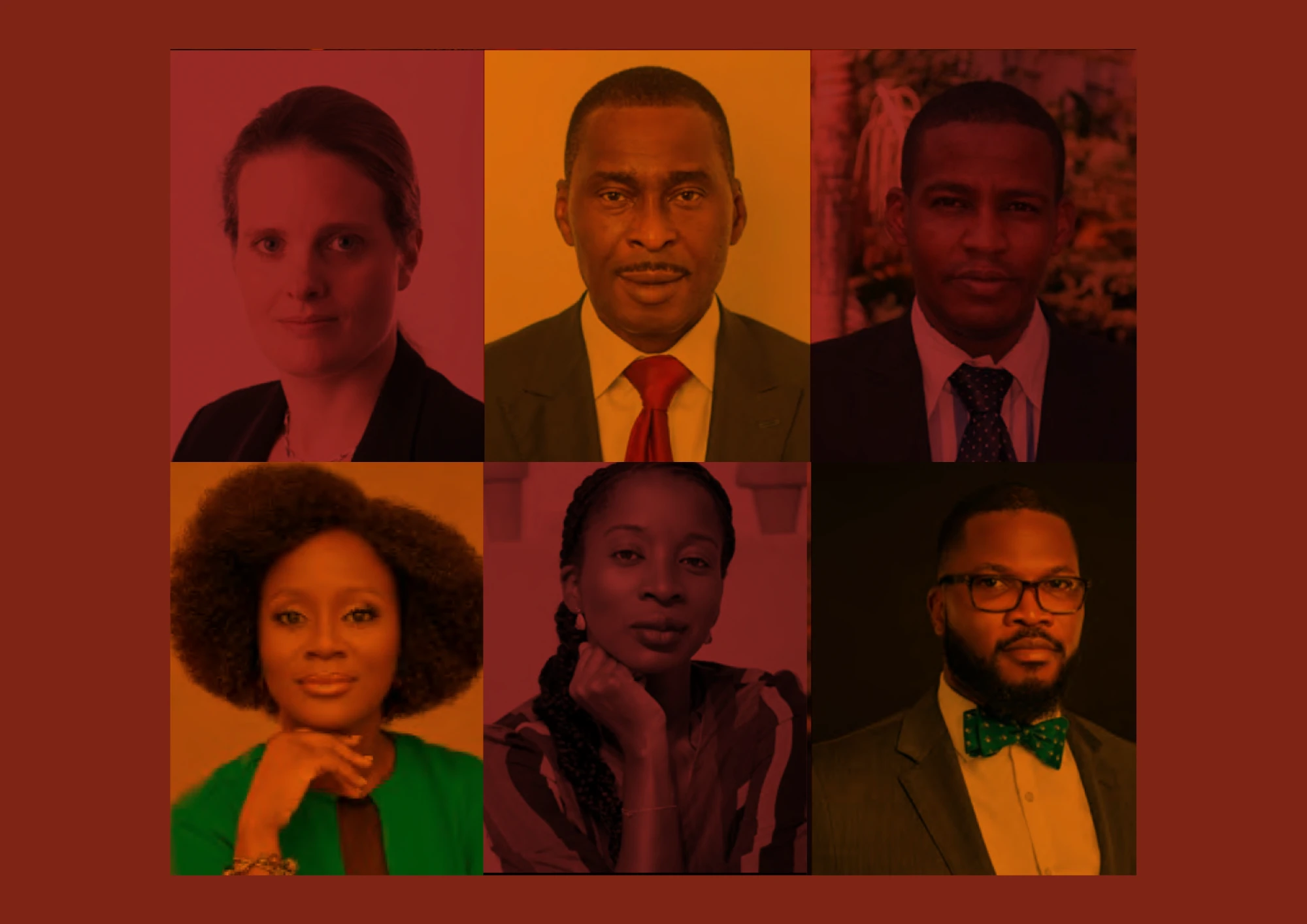
A cross-section of the speakers at the West Africa Tourism Roundtable Top L-R: Anita Mendiratta, Dr Belinda Nwosu, Brian Efa; Bottom L-R: Daniel Gray Mwanza, Joel Omeike, Kojo Bentum-Williams
For us at Red Clay, the magic came from the themes that kept coming to the surface over time, showing the interconnected nature of the issues and the need for a systemic approach to addressing the bottlenecks that impede tourism’s progress on the continent.
The top three themes?
The need for accurate data, a truly enabling business environment and patient capital for long-term investment in human capital and the destinations.
Without reliable tourism statistics, policymakers cannot plan effectively, investors cannot assess opportunities properly, and practitioners cannot measure progress meaningfully.
Regulatory frameworks, visa policies, infrastructure, business registration process, all require a cohesive and coordinated approach from policy makers to ensure tourism enterprises are able to thrive, and not merely survive.
Long-term investment is key to a sustainable tourism growth strategy. Tourism is ultimately a people business, and destinations succeed when they invest consistently in capacity building over time.
The Sessions:
Each session built on the previous ones, creating a comprehensive exploration of West Africa’s tourism landscape from multiple angles.
Session 1: Domestic Tourism and COVID-19 Trends and paths to sustainable hospitality, travel and tourism business in West Africa Speakers: Dr. Adun Okupe, Kojo Bentum-Williams, Moyo Ogunseinde
Session 2: AfCFTA and Tourism Entrepreneurship Lessons from the field in West Africa Speakers: Dr. Belinda Nwosu, Daniel Gray Mwanza, Sirili Akko
Session 3: Health, Safety and Security Destination Competitiveness in West Africa Speakers: Dr. Tagbo Azubuike, Anita Mendiratta
Session 4: Sustainability in Tourism How can sustainability thinking become more relevant in tourism development in West Africa? Speakers: Paul Onwuanibe, Joel Omeike, Olivia Ruggles-Brise
Session 5: Hospitality and Tourism Trends Projections for 2022 in West Africa Speakers: Damilola Sobo-Smith, Brian Efa
A cross-section of the speakers at the West Africa Tourism Roundtable Top L-R: Olivia Ruggles-Brise, Paul Onwuanibe, Sirili Akko; Bottom L-R: Damilola Sobo-Smith, Moyo Ogunseinde, Dr. Tagbo Azubuike
The Lasting Impact: One Conversation, One Collaboration at a Time
The true measure of successful convening goes beyond what happens during the sessions: it really is about what happens afterwards.
The West Africa Tourism Roundtable has delivered on this measure in remarkable ways, proving that building tourism that works for Africa happens one conversation and one collaboration at a time.
Feedback from participants shared the strategic partnerships that emerged (government agencies connected with private sector partners leading to policy collaborations and public-private initiatives), business collaborations (complementary partners, creating new ventures and working on projects together), knowledge networks (academics, consultants, and practitioners continue to generate research, reports, and thought leadership for the region), investment flows (the viable projects that emerged have resulted in investors identifying opportunities and partners across West and East Africa, deploying capital in previously overlooked markets and segments, and for us, the insights from the roundtable continue to influence tourism policies and development strategies in West and East Africa.
When is the Next One?
We regularly receive inquiries about when the next Africa Tourism Roundtable will convene, a recognition of an ongoing need: that Africa’s tourism potential continues to require this kind of focused, multi-sector collaborative leadership.
As we consider future convenings, we carry forward the understanding that industry leadership in tourism is never about individual success. It is about creating the conditions where collective intelligence can address the challenges that define entire regions.
This is how we build tourism that works for Africa.
The West Africa Tourism Report, which synthesizes the insights and outcomes from the roundtable series, remains available for stakeholders working on tourism development in the region. Please send an email to request a copy. The partnerships, collaborations, and projects that emerged from the roundtable continue to shape West African tourism today.
Privacy Statement
At Red Clay, we respect your privacy and are committed to protecting the information you share with us. This statement outlines our approach to user data, confidentiality, and content featured on this website.
Use of Images and Media
Photographs, videos, and other visual materials displayed on this website are used strictly for illustrative and educational purposes. Red Clay does not claim ownership of all such images unless otherwise stated. All rights remain with the original creators or copyright holders. If you believe that your image or content has been used inappropriately, please contact us and we will promptly address the matter.
Confidentiality and User Data
When you visit our website, sign up for newsletters, or engage with us, we may collect limited personal information (such as your name, email address, or organisation).
This information will only be used for the purposes you consent to—for example, responding to inquiries, sharing updates, or improving our services.
We do not sell, rent, or disclose your personal information to third parties without your consent, except where required by law. All data is kept confidential and is handled with appropriate security measures.
Cookies and Analytics
Our website may use cookies or analytics tools to track general usage patterns, such as page visits and time spent on the site. This information is used to improve user experience and is not linked to personally identifiable data.
Your Consent
By using our website, you consent to the terms of this Privacy Statement. Updates to this statement will be posted here, and continued use of the website after changes are made will indicate your acceptance of those changes.
Contact Us
If you have any questions or concerns about this Privacy Statement or the use of your data, please reach out to us at: tourism at redclayadvisory dot com